Satellite Launch Schedule 2012


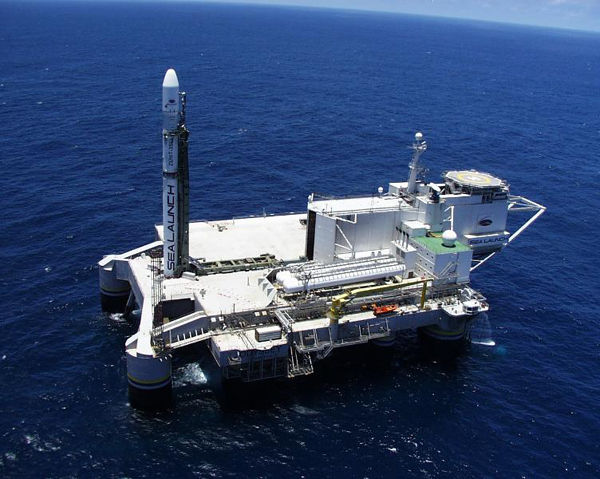
Sea Launch Site


Dates and times are given in Greenwich Mean Time.

- "NET" stands for no earlier than.
- "TBD" means to be determined.
- Recent updates appear in red type.


Feb. 13  Vega  •  LARES
Launch window: 1000-1200 GMT (5:00-7:00 a.m. EST)
Launch site: ZLV, Kourou, French Guiana

The European Vega rocket, designated VV01, will launch of its first flight with the Laser Relativity Satellite, or LARES, a small spacecraft named ALMASat 1, and nine CubeSat payloads. Delayed from 2010, mid-2011 and October. Delayed again from Jan. 26 and Feb. 9. [Feb. 3]
Feb. 14  Proton  •  SES 4
Launch time: 1936 GMT (2:36 p.m. EST)
Launch site: Baikonur Cosmodrome, Kazakhstan

An International Launch Services Proton rocket with a Breeze M upper stage will deploy the SES 4 satellite to provide telecommunications services over the Americas, Africa, Europe and the Middle East. Delayed from November. Moved up from Dec. 28. Scrubbed by technical issue on Dec. 26. Delayed from Jan. 21 and Jan. [Feb. 3]
Feb. 16  Atlas 5  •  MUOS 1
Launch window: 2246-2330 GMT (5:46-6:30 p.m. EST)
Launch site: SLC-41, Cape Canaveral Air Force Station, Florida

The United Launch Alliance Atlas 5 rocket (AV-030) will launch the first Mobile User Objective System (MUOS) satellite for the U.S. Navy. Built by Lockheed Martin, this U.S. military spacecraft will provide narrowband tactical communications designed to significantly improve ground communications for U.S. forces on the move. The rocket will fly in the 551 vehicle configuration with a five-meter fairing, five solid rocket boosters and a single-engine Centaur upper stage. [Nov. 28]
February  Long March 3C  •  Beidou
Launch time: TBD
Launch site: Xichang, China

A Long March 3C rocket will launch a Beidou navigation satellite for the Chinese government. [Jan. 20]
March 5  Proton  •  Sirius FM6
Launch time: TBD
Launch site: Baikonur Cosmodrome, Kazakhstan

An International Launch Services Proton rocket with a Breeze M upper stage will deploy the Sirius FM6 satellite for Sirius XM Radio. Delayed from January and Feb. 20. [Feb. 3]
March  PSLV  •  RISAT 1
Launch time: TBD
Launch site: Satish Dhawan Space Center, Sriharikota, India

India's Polar Satellite Launch Vehicle (PSLV) will launch the RISAT 1 Earth observation satellite. RISAT 1 carries a radar payload for all-weather, day-and-night observations for national security and environmental applications. Delayed from January. [Dec. 28]
March 9  Ariane 5  •  ATV 3
Launch time: 0941 GMT (4:41 a.m. EST)
Launch site: ELA-3, Kourou, French Guiana

Arianespace will use an Ariane 5 ES rocket to launch the European Space Agency's third Automated Transfer Vehicle, named Edoardo Amaldi. The ATV is a cargo-carrying spacecraft to deliver supplies and equipment to the orbiting International Space Station. Delayed from March 7. Docking to space station planned for March 19. [Jan. 12]
March 14  Pegasus XL  •  NuSTAR
Launch window: 1530-1930 GMT (11:30 a.m.-3:30 p.m. EDT)
Launch site: L-1011, Kwajalein Atoll, Marshall Islands

The air-launched Orbital Sciences Pegasus XL rocket will deploy NASA's Nuclear Spectroscopic Telescope Array (NuSTAR) spacecraft. NuSTAR will study high energy X-rays in the universe. Delayed from Feb. 3. [Feb. 3]
March  Proton  •  Intelsat 22
Launch time: TBD
Launch site: Baikonur Cosmodrome, Kazakhstan

An International Launch Services Proton rocket with a Breeze M upper stage will deploy the Intelsat 22 satellite to provide C-band and Ku-band communications services over Africa, Asia, Europe and the Middle East. Intelsat 22 also carries a hosted UHF payload for the Australian Defence Force. [Jan. 30]
NET March 20  Falcon 9  •  Dragon C2
Launch time: TBD
Launch site: SLC-40, Cape Canaveral Air Force Station, Florida

The SpaceX Falcon 9 rocket will launch the second Dragon spacecraft, called Dragon C2, to demonstrate rendezvous and berthing with the International Space Station for cargo-delivery. The company is building the Dragon to fly on operational resupply missions to the orbiting lab. The launch is also hauling two small Orbcomm communications satellites. Delayed from June 6, Oct. 8, Nov. 30, Dec. 19, Jan. 7 and Feb. 7. [Jan. 27]
TBD  H-2A   •  GCOM W1 & Kompsat 3
Launch time: TBD
Launch site: Tanegashima Space Center, Japan

The Japanese H-2A rocket will launch the GCOM W1 and Kompsat 3 satellites. GCOM W1, nicknamed Shizuku, is the first Global Change Observation Mission dedicated to tracking precipitation and the water cycle around the world. Kompsat 3 is a South Korean Earth observation satellite. The rocket will fly in the H-2A-202 configuration with two large solid rocket boosters. Delayed from February. [Jan. 10]
March 29  Delta 4  •  NROL-25
Launch time: TBD
Launch site: SLC-6, Vandenberg Air Force Base, California

The United Launch Alliance Delta 4 rocket will launch a classified payload for the National Reconnaissance Office, the U.S. government agency that develops and owns spy satellites. The rocket will fly in the Medium+ (5,2) configuration with two solid rocket boosters. [Aug. 16]
April  Antares  •  Demo
Launch time: TBD
Launch site: Pad 0A, Wallops Island, Virginia

The first Orbital Sciences Antares rocket, formerly known as the Taurus 2, will launch a simulated Cygnus spacecraft on a demonstration flight. Delayed from October, December and Jan. 23 and February. [Jan. 18]
April  Proton  •  Yahsat 1B
Launch time: TBD
Launch site: Baikonur Cosmodrome, Kazakhstan

An International Launch Services Proton rocket with a Breeze M upper stage will deploy the Yahsat 1B satellite. Yahsat 1B will provide commercial and government services to the Middle East, Africa, Europe and Southwest Asia for Al Yah Satellite Communications Co. of Abu Dhabi. Delayed from Feb. 17. [Jan. 18]
April 20  Soyuz   •  Progress 47P
Launch time: TBD
Launch site: Baikonur Cosmodrome, Kazakhstan

A Russian government Soyuz rocket will launch the 47th Progress cargo delivery ship to the International Space Station. Moved up from April 25. [Feb. 3]
Spring  Long March 2F  •  Shenzhou 9
Launch time: TBD
Launch site: Jiuquan, China

A Long March 2F rocket will launch the Shenzhou 9 spacecraft, a crewed mission to dock with the orbiting Tiangong 1 laboratory module. The flight will be China's fourth human space mission. [Feb. 3]
April 27  Atlas 5  •  AEHF 2
Launch window: TBD
Launch site: SLC-41, Cape Canaveral Air Force Station, Florida

The United Launch Alliance Atlas 5 rocket will launch the second Advanced Extremely High Frequency (AEHF) satellite. Built by Lockheed Martin, this U.S. military spacecraft will provide highly-secure communications. The rocket will fly in the 531 vehicle configuration with a five-meter fairing, three solid rocket boosters and a single-engine Centaur upper stage. Delayed from February 2011 due to orbit-raising delays with AEHF 1. [Oct. 8]
April 28  Antares  •  Cygnus 1
Launch time: TBD
Launch site: Pad 0A, Wallops Island, Virginia

The Orbital Sciences Antares rocket, formerly known as the Taurus 2, will launch the first Cygnus cargo freighter on a test flight to the International Space Station. Orbital Sciences is developing the Cygnus spacecraft to deliver supplies to the space station. Delayed from June and December 2011. Delayed from Feb. 23. [Nov. 14]
May  Zenit 3SL  •  Intelsat 19
Launch time: TBD
Launch site: Odyssey platform, Pacific Ocean (154° West, 0° North)

A Sea Launch Zenit 3SL rocket will deliver the Intelsat 19 communications satellite into orbit. Intelsat 19 will provide C-band and Ku-band communications services to the Asia-Pacific region, reaching users from Australia to the United States. [Jan. 30]
May 15  Soyuz  •  ISS 30S
Launch time: TBD
Launch site: Baikonur Cosmodrome, Kazakhstan

A Russian government Soyuz rocket will launch the manned Soyuz spacecraft to the International Space Station with members of the next Expedition crew. The capsule will remain at the station for about six months, providing an escape pod for the crew. Delayed from March 30 replace descent module. [Feb. 3]
May 23  Soyuz  •  MetOp B
Launch time: TBD
Launch site: Baikonur Cosmodrome, Kazakhstan

A Starsem Soyuz rocket will launch the MetOp B weather satellite for the European Space Agency and the European Organization for the Exploitation of Meteorological Satellites, or Eumetsat. The rocket will fly in the Soyuz 2 configuration with a Fregat upper stage. Delayed from April. [Nov. 25]
June 20  Atlas 5  •  NROL-38
Launch window: TBD
Launch site: SLC-41, Cape Canaveral Air Force Station, Florida

The United Launch Alliance Atlas 5 rocket will launch a classified spacecraft payload for the U.S. National Reconnaissance Office. The rocket will fly in the 401 vehicle configuration with a four-meter fairing, no solid rocket boosters and a single-engine Centaur upper stage. [Feb. 1]
June 26  H-2B   •  HTV 3
Launch time: TBD
Launch site: Tanegashima Space Center, Japan

The Japanese H-2B rocket will launch the third H-2 Transfer Vehicle. The HTV serves as an unmanned cargo vehicle to deliver equipment and supplies to the International Space Station. Delayed from Jan. 20 and Feb. 18. [Nov. 14]
June 28  Delta 4-Heavy  •  NROL-15
Launch window: TBD
Launch site: SLC-37B, Cape Canaveral Air Force Station, Florida

The United Launch Alliance Delta 4-Heavy rocket will launch a classified spy satellite cargo for the U.S. National Reconnaissance Office. The largest of the Delta 4 family, the Heavy version features three Common Booster Cores mounted together to form a triple-body rocket. Delayed from December 2011. [Feb. 1]
July 15  Soyuz  •  ISS 31S
Launch time: TBD
Launch site: Baikonur Cosmodrome, Kazakhstan

A Russian government Soyuz rocket will launch the manned Soyuz spacecraft to the International Space Station with members of the next Expedition crew. The capsule will remain at the station for about six months, providing an escape pod for the crew. Delayed from May 30. [Feb. 3]
July 16  Rockot  •  Swarm
Launch time: TBD
Launch site: Plesetsk Cosmodrome, Russia

A Eurockot Rockot vehicle will launch the Swarm mission for the European Space Agency. Swarm is an Earth Explorer mission comprising three satellites in different polar orbits to probe the geomagnetic field and its temporal evolution, in order to gain new insights into the Earth system by improving our understanding of the Earth's interior and physical climate. [Jan. 12]
Summer  Soyuz  •  Globalstar
Launch time: TBD
Launch site: Baikonur Cosmodrome, Kazakhstan

An Arianespace Soyuz rocket will launch six second-generation Globalstar mobile communications satellites. The Soyuz rocket will use a Fregat upper stage. Arianespace will oversee the commercial launch. Delayed from June, September and November. [Jan. 10]
July 25  Soyuz   •  Progress 48P
Launch time: TBD
Launch site: Baikonur Cosmodrome, Kazakhstan

A Russian government Soyuz rocket will launch the 48th Progress cargo delivery ship to the International Space Station. [Nov. 17]
August  Soyuz  •  Galileo IOV
Launch time: TBD
Launch site: Kourou, French Guiana

An Arianespace Soyuz rocket, designated VS03, will launch on its third mission from the Guiana Space Center in South America. The Soyuz will carry two Galileo in-orbit validation satellites for Europe's Galileo navigation constellation. The Soyuz 2-1b rocket will use a Fregat upper stage. Arianespace will oversee the launch. [Oct. 27]
August  Atlas 5  •  NROL-36
Launch window: TBD
Launch site: SLC-3E, Vandenberg Air Force Base, California

The United Launch Alliance Atlas 5 rocket will launch a classified spacecraft payload for the U.S. National Reconnaissance Office. Delayed from June. [Dec. 20]
Third Quarter  Zenit 3SL  •  Intelsat 21
Launch time: TBD
Launch site: Odyssey platform, Pacific Ocean (154° West, 0° North)

A Sea Launch Zenit 3SL rocket will deliver the Intelsat 21 communications satellite into orbit. Intelsat 21 will serve video distribution and direct-to-home television markets in Latin America. [Jan. 30]
Aug. 23  Atlas 5  •  RBSP
Launch window: TBD
Launch site: SLC-41, Cape Canaveral Air Force Station, Florida

The United Launch Alliance Atlas 5 rocket will launch the Radiation Belt Storm Probes (RBSP) mission for NASA. Built and managed by the Johns Hopkins University Applied Physics Laboratory, this mission includes two spacecraft to fly in highly elliptical orbits to study Earth's radiation belts and probe the influences of the sun. The rocket will fly in the 401 vehicle configuration with a four-meter fairing, no solid rocket boosters and a single-engine Centaur upper stage. Delayed from May and Aug. 23. [Dec. 20]
September  Delta 4  •  GPS 2F-3
Launch time: TBD
Launch site: SLC-37B, Cape Canaveral Air Force Station, Florida

The United Launch Alliance Delta 4 rocket will deploy the Air Force's third Block 2F navigation satellite for the Global Positioning System. The rocket will fly in the Medium+ (4,2) configuration with two solid rocket boosters. [Dec. 6]
Oct. 15  Soyuz  •  ISS 32S
Launch time: TBD
Launch site: Baikonur Cosmodrome, Kazakhstan

A Russian government Soyuz rocket will launch the manned Soyuz spacecraft to the International Space Station with members of the next Expedition crew. The capsule will remain at the station for about six months, providing an escape pod for the crew. Delayed from Sept. 26. [Feb. 3]
Dec. 1  Pegasus XL  •  IRIS
Launch time: TBD
Launch site: L-1011, Vandenberg Air Force Base, California

The air-launched Orbital Sciences Pegasus XL rocket will deploy NASA's Interface Region Imaging Spectrograph (IRIS). IRIS will make detailed measurements of the flow of energy and plasma through the sun's atmosphere and heliosphere. [Feb. 1]
December  Atlas 5  •  TDRS K
Launch window: TBD
Launch site: SLC-41, Cape Canaveral Air Force Station, Florida

The United Launch Alliance Atlas 5 rocket will launch the TDRS K communications and delay relay satellite for NASA. The Tracking and Data Relay Satellite System (TDRSS) connects mission control with the International Space Station and other orbiting satellites. The rocket will fly in the 401 vehicle configuration with a four-meter fairing, no solid rocket boosters and a single-engine Centaur upper stage. Delayed from June 12. [Nov. 28]


TrackingSat GPS - Satellite Dish Alignment Tools.
TrackingSat is useful to assist users that need to install
your antenna and align it with the satellites in orbit.
If you want to exchange links to increase PR, contact us.
Satellite Dish Alignment Tools


Copyright © 1997 - 2011  Wayana Software  |  All Rights Reserved  |  Design by Wayana Software

  •  
  •